Custom Pet Portrait Guide: Choose Art That Feels Like Your Pet
Last updated:
By the Get Pet Art editorial teamA custom pet portrait is artwork created from your own pet photo. Choose a style that fits your pet and room, upload a clear image, and inspect the instant preview before ordering. Get Pet Art offers 1–4 pets, optional names, Digital Downloads, posters, framed posters, and canvas.
Key takeaways
- Start with likeness and expression, not a fashionable costume.
- Compare style, print format, and room size as separate decisions.
- Inspect the instant preview before you place your order.
- Use separate clear reference photos for a portrait with 1–4 pets.
- Plan production and US transit separately for gifts.
Start with the pet, not the product menu
A portrait succeeds when somebody who knows the animal recognizes a small, specific thing: one tilted ear, a watchful stare, or the uneven white patch on the muzzle. Before comparing print sizes, write down three details you do not want to lose. This short likeness brief gives you a more useful standard than “make it beautiful.”
Next, decide what the portrait is for. A playful birthday gift can carry a dramatic costume. A portrait beside family photographs may need a quieter presentation. Art for a child’s bedroom can use a stronger story than a piece intended for a calm reading nook. There is no need to choose the same style for every purpose.
Browse all custom pet portrait styles only after you have those priorities. You will be comparing designs against a real brief rather than collecting possibilities with no way to choose.
Compare style families by mood and visual weight
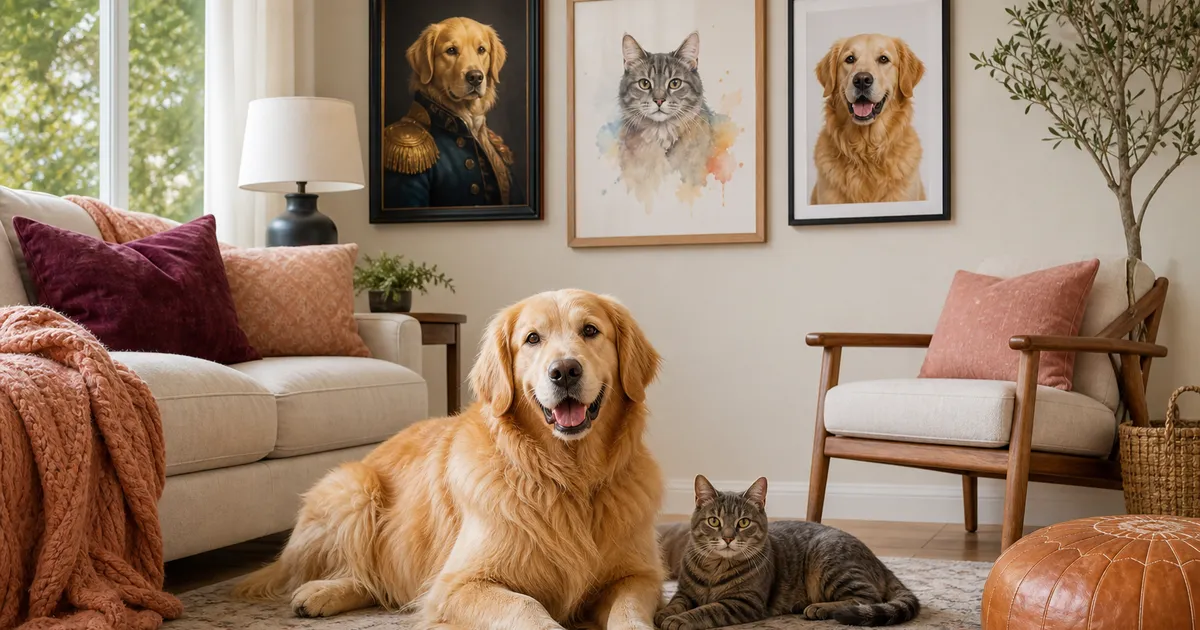
Costume, background, and color have different jobs. A costume supplies a story. A background determines how much visual attention the picture attracts. Color helps the artwork connect to the room. A portrait can be humorous without being visually loud, and it can look formal without needing a dark wall behind it.
| Style family | Visual effect | Useful decision question |
|---|---|---|
| Royal | Crowns, rich robes, courtly drama | Would a formal character suit this expression? |
| Modern | Crisp shapes and refined graphic shading | Does the room need a clean focal point? |
| Watercolor | Soft washes and airy white space | Would a gentler edge suit the display? |
| Heroes | Original adventure and character settings | Is there a personal story behind the role? |
| Floral | Roses, peonies, and romantic color | Would flowers complement the recipient’s taste? |
The Modern Pet Portrait uses crisp shapes and refined shading rather than a costume. The Watercolor Pet Portrait uses layered washes and pastel splashes. If your pet seems to run the household, The King portrait adds a jeweled crown and velvet robe.
Use the detailed guides to narrow the shortlist
For crowns and robes, read the royal pet portrait guide. For a broader discussion of courtly composition, fabric, and historic atmosphere, explore Renaissance-inspired pet portraits. These looks overlap, but a good choice depends more on color and posture than on a historical label.
If your priority is softness rather than costume, the watercolor portrait guide explains how to evaluate face detail against loose edges. For a playful gift, funny pet portrait ideas shows how to build a joke around personality rather than choosing a random outfit.
Animal-specific details also matter. Our custom dog portrait guide covers ears, muzzle shape, and expressions; cat portrait ideas focuses on feline gaze, whisker space, and styling. Read the one that matches your subject before committing to the reference photo.
Separate the artwork decision from the material decision
A dramatic design does not automatically require canvas, and an airy watercolor does not have to be small. First choose the image. Then ask what surface and dimensions make sense for the wall. If you already own a frame, measure its usable opening rather than its outer edge before choosing a poster.
Our pet portraits on canvas guide explains texture, viewing distance, and layout. Compare that approach with framed pet portraits if the room already contains family photographs or framed artwork. Matching the visual rhythm of the room can matter more than matching every frame exactly.
Imagine a hallway with narrow wall space and a den with an empty wall above a chair. The hallway may benefit from a modest framed portrait viewed close up. The den may support a larger composition that reads from the doorway. Buying the same dimensions for both spaces would solve neither problem particularly well.
Compare companies using questions you can verify
A useful comparison goes beyond a gallery of example pets. Check when you see your own preview, whether the desired pet count is supported, which formats exist, and where physical orders ship. Keep a short written record of the answers so a compelling example image does not erase practical differences.
If you arrived through a competitor search, our pet portrait company comparison checklist offers a neutral framework. It does not assume another business’s pricing, timing, or quality. Apply the same questions to every company, including Get Pet Art, using current product information.
For a household with two pets, the deciding issue may be shared composition. For a last-minute idea, the distinction between a digital file and a shipped product may matter more. For a memorial, the key question may simply be whether the available photograph preserves the expression the family wants to remember.
Prepare a photo that carries the likeness
Choose the expression your household recognizes instantly. A relaxed closed mouth may suit a dignified portrait; a bright open-mouth expression may better represent an enthusiastic dog. For a cat, prioritize visible eyes and an unobstructed face over a dramatic curled sleeping pose.
Open the original camera file rather than a screenshot from a message thread. Zoom in on the eyes, nose, and fur around the mouth. You should be able to tell where the eyelids end and the coat begins. A beautiful background cannot compensate for a face that is soft from movement. If two photos compete, favor the sharper face over the prettier scenery.
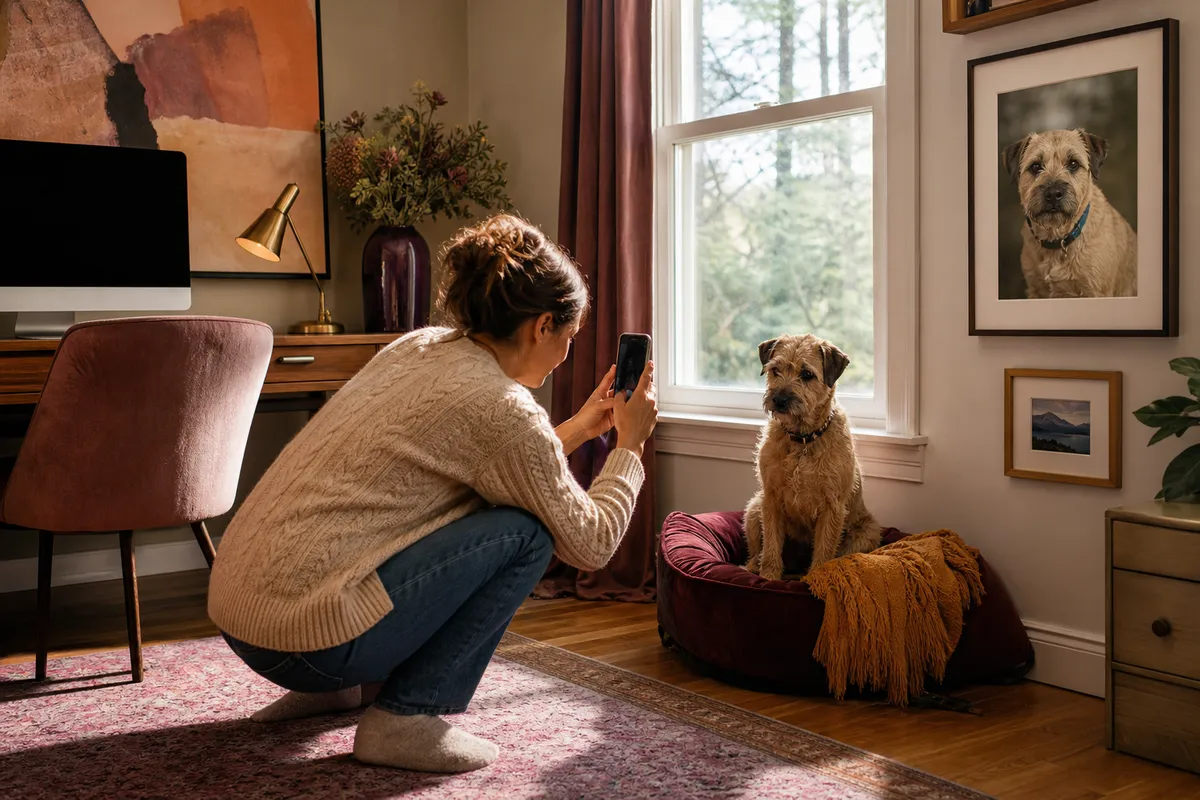
Photograph at your pet’s eye level beside a window, with the light falling across the face rather than shining from behind. Keep both ears inside the image, including the tips, and leave breathing room above the head. Avoid extreme wide-angle close-ups: they can make a nose look larger and the eyes farther apart than they appear in daily life.
Do not force an unfamiliar pose or costume for the reference photo. Let your pet settle in a familiar spot, take a short sequence, and stop when they lose interest. For general animal-care information, visit the ASPCA; the practical priority here is a comfortable pet, not a perfect performance.
Use the preview as a decision tool
At Get Pet Art, every portrait starts with a preview: upload your photo, see an instant preview on the page, and then order. The portrait is created from your photo, so judge the result against the real pet rather than an example animal. Pause at this stage; choosing a format should come after you like the face.
Compare two styles using the same reference photo whenever possible. This keeps the expression constant, so you can judge whether the surrounding color and styling improve the portrait rather than being distracted by a different photograph.
Inspect the face first, the composition second, and the optional pet name last. Look for familiar markings on the forehead, the direction of the ears, and the expression around the mouth. Check spelling letter by letter, including punctuation or a nickname. A name is optional; leaving it off can make a decorative portrait feel more like the other artwork in your room.
For 1–4 pets, choose the matching pet count and upload a photo of each. Separate reference photos are useful when one animal always looks away in group pictures. Compare the apparent head sizes and the space between faces in the preview. If one pet feels squeezed into the background, reconsider the composition before you order.
Choose the format after choosing the artwork
Decide whether the portrait needs to travel with you, sit within an existing gallery wall, or anchor a blank space. A digital file, framed poster, and canvas solve different problems; none is the universal best choice.
A Digital Download is always available. Choose it when you want a file rather than a shipped print, and check the file details before arranging any separate printing. Posters let you choose your own frame. Framed posters simplify the presentation, with black, white, and oak/wood frame choices. Canvas gives the portrait a more substantial wall presence without a poster-style frame.
Measure the actual wall before selecting inches in a menu. Mark a 12×16-inch or 18×24-inch rectangle with removable paper, then view it from the seat or doorway where you will usually see the picture. Treat those as comparison sizes, not a rule that larger is always better. Include the visual space a frame adds and leave room around adjacent shelves, switches, and furniture.
Printed portraits are produced on demand through Printful after purchase. Review the current production estimate, 2-5 business days, separately from transit time. Shipping is within the US only. Check $75 for the current free-shipping terms, and consult December 12, 2026 if the order is intended for Christmas; neither production time nor a deadline should be mistaken for an unconditional arrival promise.
Turn a room measurement into a size choice
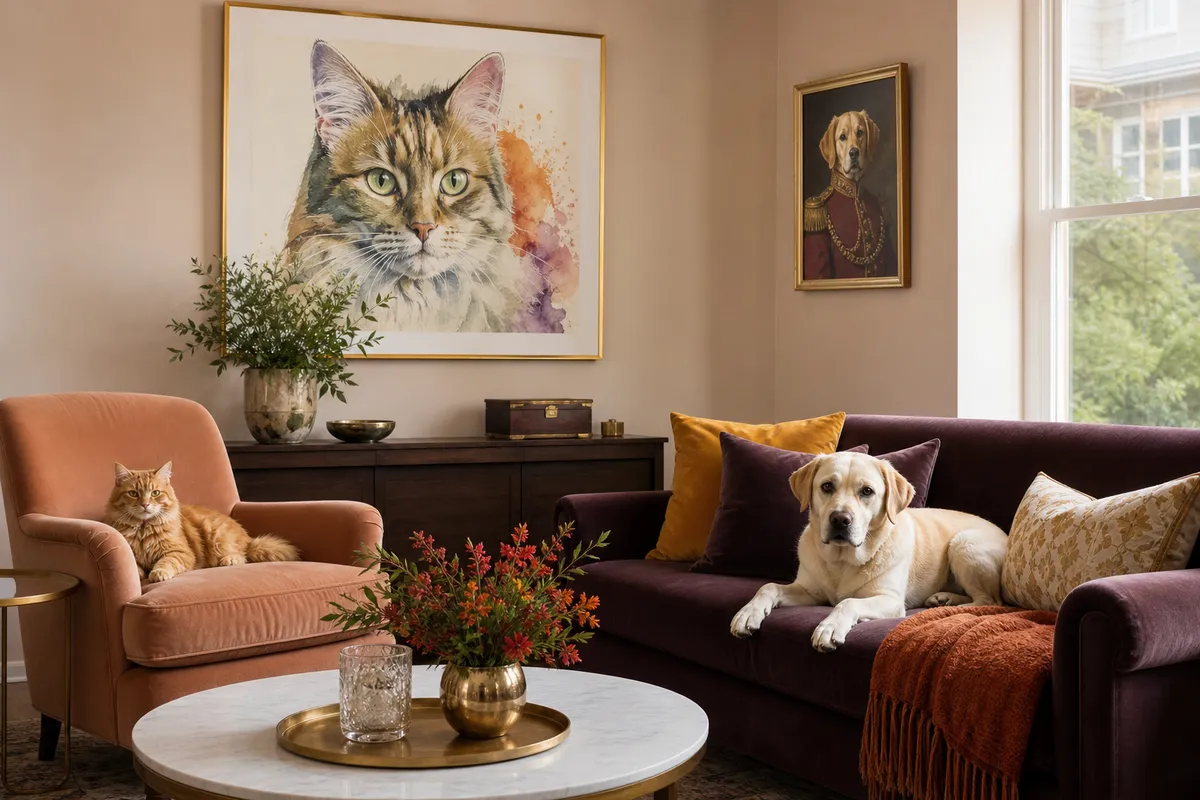
Start with the usable wall area, not the whole wall. A thermostat, an opening door, and a tall lamp can each reduce the space that actually belongs to the picture. Measure the clear width and height in inches, then note where you will normally stand or sit. A portrait beside a desk receives much closer attention than one across a living room.
What size works above a small console?
Suppose your console is 36 inches wide. A paper rectangle measuring 12×16 inches leaves a noticeably different impression from an 18×24-inch rectangle, even though both fit above it. Center each mockup over the furniture, account for the frame's outer dimensions, and photograph the arrangement from the doorway. These are planning examples; confirm available dimensions on the selected product rather than assuming every format offers both sizes.
If the smaller mockup seems lost, you have two useful options: choose a larger available format or build a deliberate grouping with existing photographs. Do not buy extra portraits merely to fill a measurement. An arrangement with one pet portrait and two meaningful family pictures may tell a better story.
How should you plan a narrow hallway?
Check the view while walking past, not just while facing the wall. A compact portrait with a clear face can work better than a broad scene whose details require you to step backward. Keep the picture clear of switches and door trim. If you already have a gallery, measure the gaps between existing frames and repeat that spacing before introducing another size.
Work through two practical buying briefs
A first portrait for a shared apartment
Imagine a tabby owner choosing between a colorful costume and a quiet watercolor for a room shared with a roommate. First agree on the display location. Next compare both styles using the same sharp photo, then decide whether the stronger color belongs among the existing furnishings. A poster suits someone who already owns a compatible frame; a framed poster removes that separate shopping decision. The preferred format follows the room and the available frame, not the novelty of the style.
A gift for a household with three pets
Before ordering, ask whether the recipient would prefer one group portrait or separate pieces over time. A single composition needs three readable faces, while separate pieces need enough wall space and a consistent display plan. Confirm which pet names the household actually uses; a formal registration name may be less personal than an everyday nickname.
Buyer checklist before you upload
- Write down the intended room, viewing position, and usable wall measurements.
- Choose one expression and three identifying features to preserve.
- Confirm the recipient's preferred pets, names, and appetite for humor.
- Check whether an existing frame needs a particular opening or mat arrangement.
- Keep the original photo accessible so you can compare it directly with the preview.
Completing this brief before uploading helps separate genuine requirements from attractive extras. If two options remain equally appealing, choose the one that makes the face easier to recognize in the place where it will actually hang.
A final check before checkout
- The style fits both the pet’s expression and the intended room.
- The eyes, ears, and distinctive markings look familiar in the preview.
- The pet count is correct, from 1–4 pets, and any optional names are spelled correctly.
- The selected format, dimensions in inches, and any black, white, or oak/wood frame suit the wall.
- The US delivery address and current production and shipping information have been checked.
A successful portrait is not simply an impressive example image with your pet substituted into it. It is a familiar face, thoughtfully presented at a size you will enjoy living with. Make those decisions in that order, and the final choice becomes much easier.
Return to this custom pet portrait planning guide when you compare your final two choices. Save the photo you used so future portraits of other pets can share a similar angle and expression.
Frequently asked questions
What is the best style for a custom pet portrait?
The best style depends on the expression you want to preserve and where the portrait will live. Modern artwork emphasizes a clean graphic presentation, watercolor offers a softer setting, and royal or hero designs add a character story. Compare the same clear photo across styles, then choose the version that still feels unmistakably like your pet.
Do I see my pet portrait before ordering?
Yes. Every Get Pet Art portrait starts with an instant preview on the page. Upload your photo, inspect the likeness and composition, and order only after you have reviewed it. Check distinctive markings, the crop around the ears, and the spelling of an optional pet name before choosing the final format.
Can I include more than one pet?
Yes. Get Pet Art supports 1–4 pets in a portrait. Select the appropriate pet count and upload a photo of each animal. You do not need to stage a perfect group photograph. Review the preview to see whether each face has enough space and whether the pets look balanced together before ordering.
Can I buy only a digital pet portrait?
Yes. A Digital Download is always available, so you can choose a portrait without ordering a physical print. Review the file details and any requirements of a separate print provider before planning your own printing. If you prefer a shipped format, Get Pet Art also offers posters, framed posters, and canvas within the US.
Is a pet portrait a good gift?
It can be a thoughtful gift when you know which photo and decorating style the recipient likes. Confirm the correct name and consider whether they prefer playful costumes or a quieter likeness. If the room size or frame preference is uncertain, a Digital Download avoids guessing about a physical display, though you should still choose the artwork carefully.
How should I plan production and shipping?
Printed portraits are produced on demand through Printful after purchase, and shipping is within the US only. Check the current production estimate of 2-5 business days and allow separately for transit. Review $75 for current terms. For Christmas orders, consult December 12, 2026 rather than assuming a seasonal arrival date or relying on an old estimate.
Sources
Keep reading
Pet portrait tips and gift reminders
Occasional emails with photo tips, new styles and holiday order reminders.