Royal Pet Portrait: A Practical Guide to Crowns and Character
Last updated:
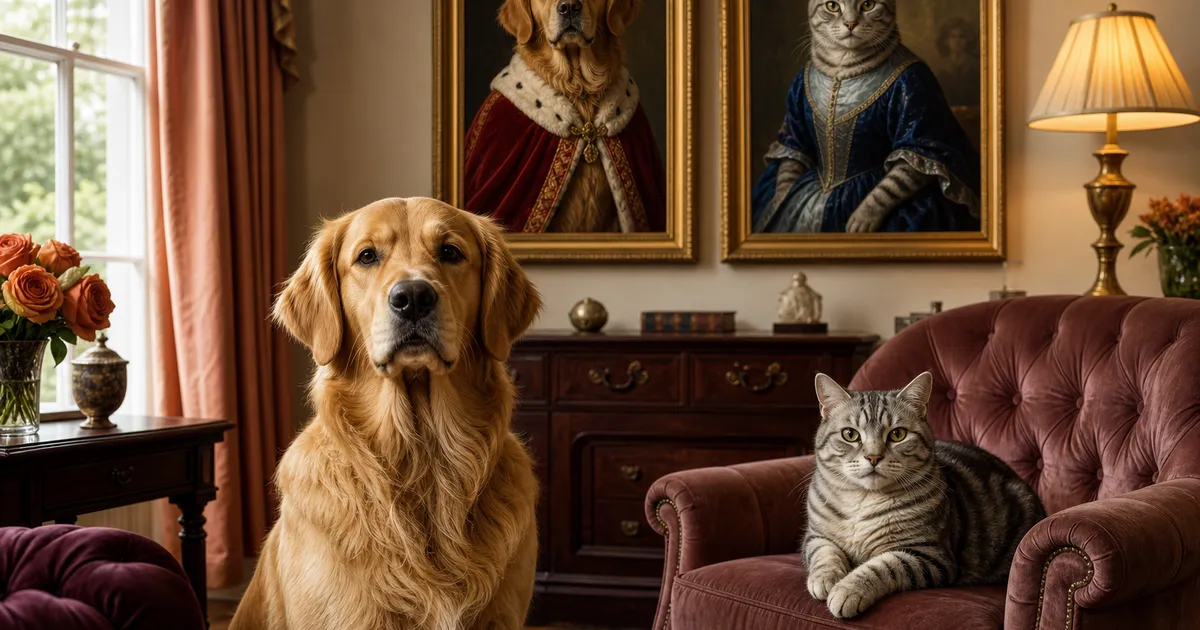
By the Get Pet Art editorial teamA royal pet portrait presents your dog or cat in a courtly setting with crowns, robes, or formal clothing, created from your photo. Choose the character by expression, coat contrast, and room palette. Upload a clear image, inspect the instant preview, then select a digital or printed format.
Key takeaways
- Let your pet’s expression determine the royal role.
- Compare fur contrast against collars, robes, and backgrounds.
- The King, Queen, Duchess, and Prince offer different palettes.
- No costume is needed for the reference photo.
- Review the face before the crown or decorative details.
Choose a royal role from real personality
The funniest thing about a royal portrait is often how little the pet has to change. A cat who waits beside an empty bowl as if issuing a decree already has a courtly expression. A dog who welcomes every guest with cheerful enthusiasm might suit a youthful heir better than a severe monarch.
Write a one-line character brief before browsing: “calm ruler of the sofa,” “charming household prince,” or “quietly elegant companion.” This is a design tool, not a claim about breed temperament. Two dogs of the same breed can call for completely different portraits because their everyday expressions differ.
Explore the royal pet portrait collection with that brief in mind. Look at how each collar frames the muzzle, where the light falls, and whether the costume’s colors belong in the room where the picture will hang.
Compare the four court characters
Royal styling is not one interchangeable crown. Each character uses a different combination of color, fabric, and ornament. Choose the combination that supports your pet’s face rather than assigning a role according to the pet’s sex or size.
| Character | Signature details | What to inspect in your preview |
|---|---|---|
| The King | Jeweled crown, red velvet, ermine trim | Contrast between pale fur and the light collar |
| The Queen | Tiara, pearls, blue silk, lace | Space around ears and the line of the jaw |
| The Duchess | Emerald brocade, gold embroidery, pearls | Separation of dark fur from the moody setting |
| The Prince | Navy jacket, gold epaulettes, small coronet | Balance between the face and formal shoulders |
The King’s red velvet portrait makes a confident focal point. The Queen’s blue silk portrait offers cooler color and delicate ornament. Choose The Duchess in emerald brocade for a deeper green atmosphere, or The Prince in a navy jacket for a tailored, youthful presentation.
Use coat color as a design check, not a restriction
A white dog can look striking against a deep background, but pale fur beside ivory trim needs careful inspection. A black cat can look wonderfully dramatic in a moody setting, provided the eyes, ear edges, and cheek outline remain readable. No coat color automatically belongs to only one royal design.
For patterned pets, look for competition between facial markings and ornate clothing. A tabby’s forehead stripes may already be visually busy. If you keep noticing the costume before the eyes, try a different character or use a calmer reference expression. The goal is hierarchy: face first, costume second, background third.
Picture a cream-colored dog in a room with blue pillows and warm wood furniture. A cool gown may connect with the pillows, while a red robe adds a deliberate contrast. Either can work. The more useful question is whether the picture feels integrated or whether it becomes the only colorful object in the room.
Create a household court without visual clutter
For two pets, decide whether you want one shared portrait or two companion pieces. A shared composition celebrates the relationship; separate portraits give each face more room and make it easier to choose different roles. Neither approach requires pets to look identical or have matching expressions.
If ordering a pair, keep a few elements consistent: print dimensions, frame color, and approximate face scale. The clothing can differ. A King and Queen pair reads as deliberate when the frames and spacing agree, even if one animal is a large dog and the other is a small cat.
For three or four pets, judge the entire grouping at a small scale before enlarging it. You should still be able to find each face quickly. Avoid treating all decorative elements as equally important; when the composition becomes busy, likeness and clear spacing matter more than seeing every pearl or embroidered flourish.
Give the royal portrait a place in a real room
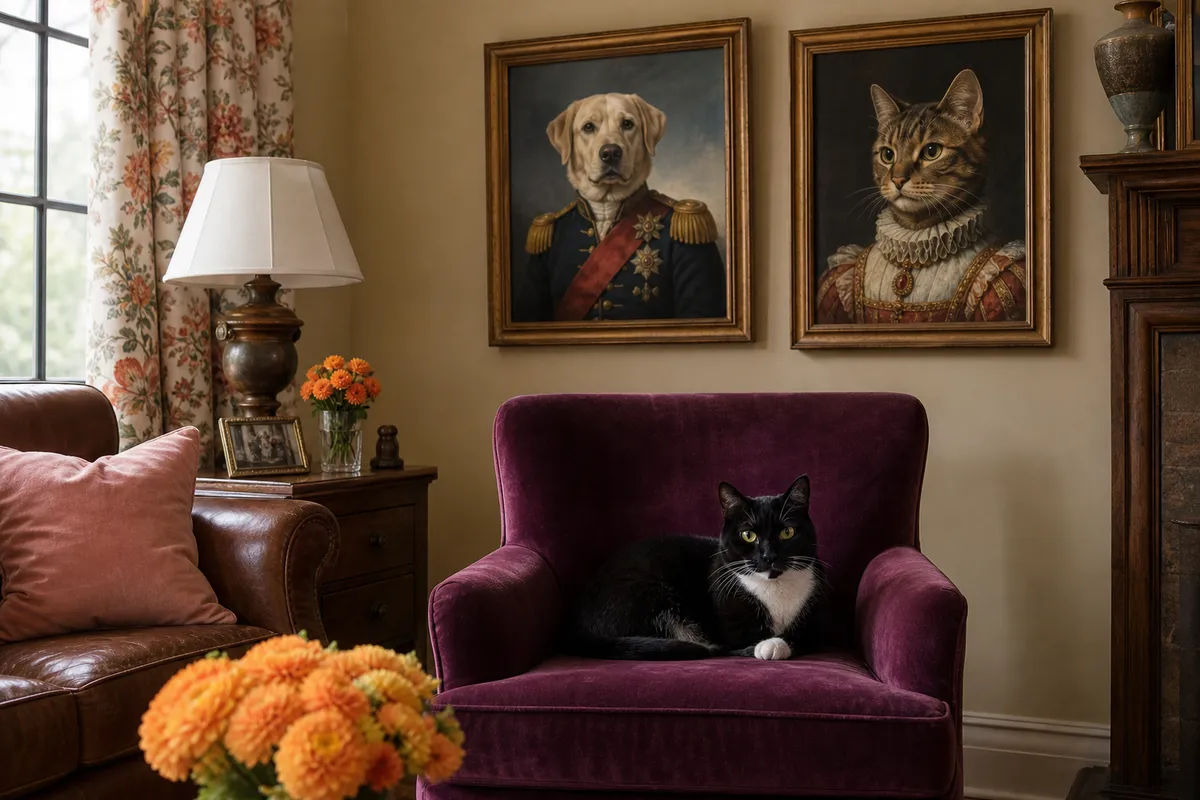
You do not need antique furniture to display courtly pet art. A royal portrait can be a single theatrical note in a simple US apartment or a cozy suburban living room. Keep nearby objects quieter if you want the humor to feel intentional rather than turning the whole corner into a costume display.
Black frames can sharpen a dramatic composition. White frames create a lighter boundary, while oak/wood frames connect rich colors with natural furniture. Hold up physical samples or household objects near the intended wall if you are unsure about warm versus cool finishes. Screen colors alone are a weak guide to the room.
For broader inspiration on portraits, costume, and decorative detail, browse The Metropolitan Museum of Art. Notice general ideas such as light on a face or the rhythm of fabric folds. The purpose is to develop your eye, not to request a copy of a named painting.
Prepare a photo that carries the likeness
For a royal dog portrait, a level head and relaxed neck usually give you a more convincing formal pose than a dog photographed from directly above. For a royal cat portrait, choose an alert but comfortable gaze. You need only the pet, not a real crown, robe, or staged throne.
Open the original camera file rather than a screenshot from a message thread. Zoom in on the eyes, nose, and fur around the mouth. You should be able to tell where the eyelids end and the coat begins. A beautiful background cannot compensate for a face that is soft from movement. If two photos compete, favor the sharper face over the prettier scenery.
Photograph at your pet’s eye level beside a window, with the light falling across the face rather than shining from behind. Keep both ears inside the image, including the tips, and leave breathing room above the head. Avoid extreme wide-angle close-ups: they can make a nose look larger and the eyes farther apart than they appear in daily life.
Do not force an unfamiliar pose or costume for the reference photo. Let your pet settle in a familiar spot, take a short sequence, and stop when they lose interest. For general animal-care information, visit the ASPCA; the practical priority here is a comfortable pet, not a perfect performance.
Use the preview as a decision tool
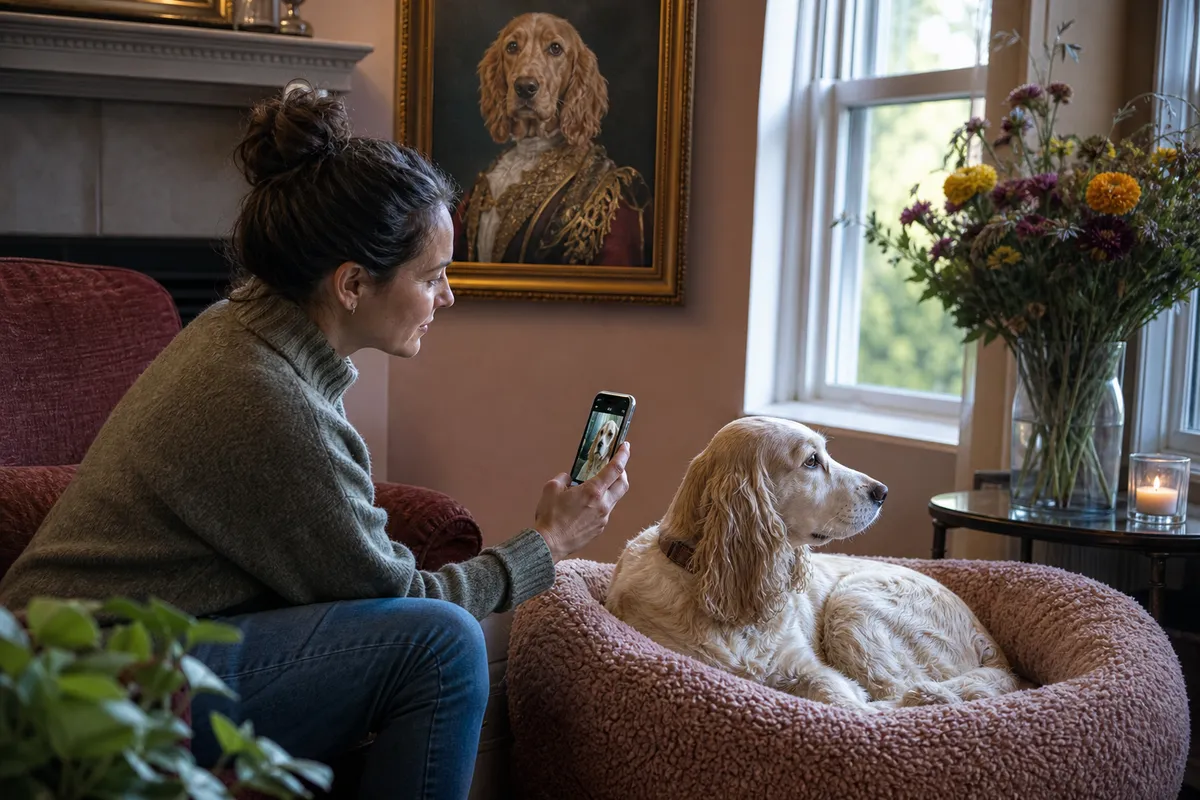
At Get Pet Art, every portrait starts with a preview: upload your photo, see an instant preview on the page, and then order. The portrait is created from your photo, so judge the result against the real pet rather than an example animal. Pause at this stage; choosing a format should come after you like the face.
Check the relationship between the ears and crown, then the transition between the jaw and clothing. Long fur should still feel like part of your pet rather than a decorative collar. A solemn face can carry a richly decorated setting; a broad grin may make the same design feel intentionally comic.
Inspect the face first, the composition second, and the optional pet name last. Look for familiar markings on the forehead, the direction of the ears, and the expression around the mouth. Check spelling letter by letter, including punctuation or a nickname. A name is optional; leaving it off can make a decorative portrait feel more like the other artwork in your room.
For 1–4 pets, choose the matching pet count and upload a photo of each. Separate reference photos are useful when one animal always looks away in group pictures. Compare the apparent head sizes and the space between faces in the preview. If one pet feels squeezed into the background, reconsider the composition before you order.
Choose the format after choosing the artwork
Royal designs contain small visual accents such as pearls, lace, and gold trim. Choose a size that lets you enjoy the face at the normal viewing distance, rather than buying only to reveal every decorative detail. The pet should remain the focal point.
A Digital Download is always available. Choose it when you want a file rather than a shipped print, and check the file details before arranging any separate printing. Posters let you choose your own frame. Framed posters simplify the presentation, with black, white, and oak/wood frame choices. Canvas gives the portrait a more substantial wall presence without a poster-style frame.
Measure the actual wall before selecting inches in a menu. Mark a 12×16-inch or 18×24-inch rectangle with removable paper, then view it from the seat or doorway where you will usually see the picture. Treat those as comparison sizes, not a rule that larger is always better. Include the visual space a frame adds and leave room around adjacent shelves, switches, and furniture.
Printed portraits are produced on demand through Printful after purchase. Review the current production estimate, 2-5 business days, separately from transit time. Shipping is within the US only. Check $75 for the current free-shipping terms, and consult December 12, 2026 if the order is intended for Christmas; neither production time nor a deadline should be mistaken for an unconditional arrival promise.
Test the courtly look at room scale
Can a royal portrait work in a small office?
Yes, but plan around the furniture and your normal sightline. Above a desk, a portrait competes with monitors, task lighting, and shelves. Try a paper mockup before choosing a format, then sit at the desk and check whether you can enjoy the face without turning toward a crowded corner. A dark, ornate design may need a quieter patch of wall rather than more surrounding decoration.
For example, compare a 12×16-inch rectangle and an 18×24-inch rectangle on the wall beside a 40-inch desk. Treat these as planning measurements, not promises of available product sizes. The smaller rectangle may feel complete when viewed from the chair; the larger one may dominate the same corner. Confirm actual size options and include the frame's outside dimensions before deciding.
How much space does a pair of royal portraits need?
Calculate the complete arrangement before placing an order. Two frames with outer widths of 16 inches, separated by a 3-inch gap, occupy 35 inches of wall. That example describes the overall frames, not the print openings. Leave additional clear wall on both sides so the pair does not look wedged between a bookcase and door trim.
Test the arrangement with paper at the same height. If the pair feels cramped, consider another wall or a shared composition rather than reducing each face until it is difficult to recognize. Where one pet has tall ears and the other has a broad head, compare the visual prominence of the faces, not just the identical outside edges.
Solve two common royal design dilemmas
A black cat disappears into a dramatic setting
Suppose the cat has green eyes and a small white chin. The room favors deep greens, so The Duchess initially seems obvious. Inspect the instant preview before letting the room palette decide: can you still distinguish the cheek outline, chin patch, and ears? Compare another royal role using the same photo if those features recede. A harmonious color scheme is not worth losing the cat's recognizable silhouette.
A cheerful dog looks too serious in the reference
A closed-mouth photograph may be sharp but unfamiliar if everyone knows the dog for a broad, relaxed grin. Try the familiar expression before changing costumes. The contrast between a happy dog and formal clothing can supply the joke on its own. There is no need to add extra props, a longer name, or a more elaborate display to explain it.
Royal portrait buyer checklist
- Choose the household character first, without assigning roles by breed or sex.
- Check that the crown leaves the ears readable and the collar does not hide the jaw.
- Compare the coat outline against both the clothing and background.
- Measure the whole display, including frames and gaps for companion pieces.
- Confirm that the recipient enjoys a theatrical portrait before making it a surprise gift.
Keep a short note explaining your final choice: familiar expression, readable face, and a workable wall location. Those reasons will remain useful after the novelty of comparing crowns has worn off.
A final check before checkout
- The crown, collar, and robe support the face rather than overpowering it.
- The eyes, ears, and distinctive markings look familiar in the preview.
- The pet count is correct, from 1–4 pets, and any optional names are spelled correctly.
- The selected format, dimensions in inches, and any black, white, or oak/wood frame suit the wall.
- The US delivery address and current production and shipping information have been checked.
The strongest royal portrait is a portrait of your pet first and a royal joke second. Choose the role that makes the expression feel inevitable, then let a restrained frame and thoughtful placement carry the theatrical details.
For the full buying sequence, return to our custom pet portrait guide. For a deeper look at fabric and atmosphere, explore our Renaissance pet portrait guide; for a lighter mood, try personality-led funny portrait ideas.
Frequently asked questions
What makes a royal dog portrait look convincing?
A clear, eye-level reference photo and a role that matches the dog’s expression do most of the work. Check that the muzzle, eye spacing, and familiar ear shape remain recognizable in the preview. Rich clothing can add character, but it should not overwhelm the face or become the only reason you like the portrait.
Do I see my pet portrait before ordering?
Yes. Every Get Pet Art portrait starts with an instant preview on the page. Upload your photo, inspect the likeness and composition, and order only after you have reviewed it. Check distinctive markings, the crop around the ears, and the spelling of an optional pet name before choosing the final format.
Can I include more than one pet?
Yes. Get Pet Art supports 1–4 pets in a portrait. Select the appropriate pet count and upload a photo of each animal. You do not need to stage a perfect group photograph. Review the preview to see whether each face has enough space and whether the pets look balanced together before ordering.
Can I buy only a digital pet portrait?
Yes. A Digital Download is always available, so you can choose a portrait without ordering a physical print. Review the file details and any requirements of a separate print provider before planning your own printing. If you prefer a shipped format, Get Pet Art also offers posters, framed posters, and canvas within the US.
Can a cat have a royal portrait too?
Yes. Royal styles suit cats as well as dogs, and the choice should follow the individual animal rather than a species rule. An alert tabby can look charming in a coronet, while a composed longhaired cat may suit pearls and a silk gown. Choose a sharp photo with visible eyes and enough room around the ears.
How should I plan production and shipping?
Printed portraits are produced on demand through Printful after purchase, and shipping is within the US only. Check the current production estimate of 2-5 business days and allow separately for transit. Review $75 for current terms. For Christmas orders, consult December 12, 2026 rather than assuming a seasonal arrival date or relying on an old estimate.
Sources
Keep reading
Pet portrait tips and gift reminders
Occasional emails with photo tips, new styles and holiday order reminders.